Xuanyou Liu - HCI Researcher at Northwestern University

Hello, I'm

Xuanyou Liu (Zed)

HCI Researcher

Department of Computer Science
Northwestern University · MU Collective

Human-AI InteractionWearable ComputingHaptics

About

I build interactive systems at the intersection of human-AI interaction, wearable computing, and haptic technologies.

I am a graduate student in Computer Science at Northwestern University (MU Collective), advised by Prof. Jessica Hullman. My research spans human-AI interaction, wearable computing, and haptic interfaces, exploring how intelligent systems and novel sensing technologies can augment human perception and support more effective decision-making.

Previously, I collaborated with Prof. Pedro Lopes at the University of Chicago (HC-Integration Lab) and with Prof. Karan Ahuja at Northwestern (SPICE Lab). I received my M.S.E. in Robotics from the University of Pennsylvania (GRASP Lab), advised by Prof. Michelle Johnson. I also hold a B.E. in Industrial Design from Xi'an Jiaotong University.

News

  • Mar 2026 Our paper "MARIO" was accepted to Findings of CVPR 2026!
  • Sep 2025 Started my graduate studies at Northwestern University!
  • May 2025 Graduated from UPenn with M.S.E. in Robotics.
  • Jan 2025 Our paper "Seeing with the Hands" was accepted to CHI 2025!

Research

Human-AI Interaction - Bayesian rational agent framework for human-AI decision-making

Human-AI Interaction

Investigating how people reason and make decisions alongside AI systems, with a focus on uncertainty communication, AI-advised decision-making, and designing interfaces that align with human cognitive processes.

Northwestern Human-AI Interaction Decision-Making
Wearable Haptics

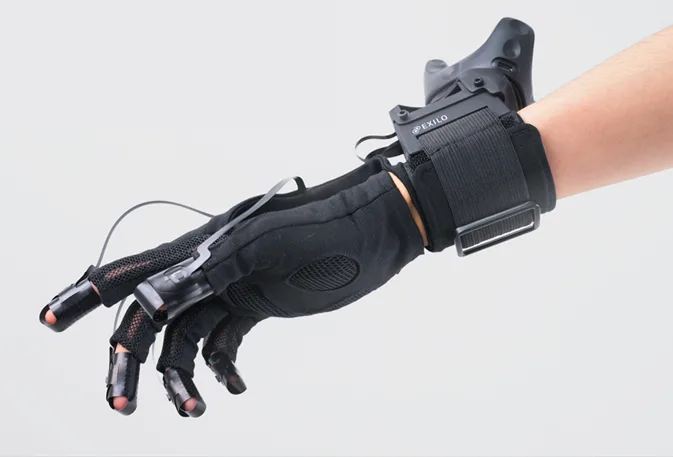
Wearable Haptics

Developing compact, high-resolution electrotactile interfaces that deliver rich tactile feedback through the skin, enabling new forms of sensory augmentation and communication for wearable devices.

UChicago UPenn Haptics Wearables
EIT for Hand Estimation

EIT for Hand Estimation

Exploring Electrical Impedance Tomography (EIT) as a novel sensing modality for continuous hand pose estimation, with a focus on integrating and miniaturizing sensing hardware for low-power, unobtrusive wearable input.

Northwestern EIT Machine Learning

Publications

* denotes equal contribution

Smartwatch-oriented wrist EIT gesture sensing prototype
UIST 2026 Under Review

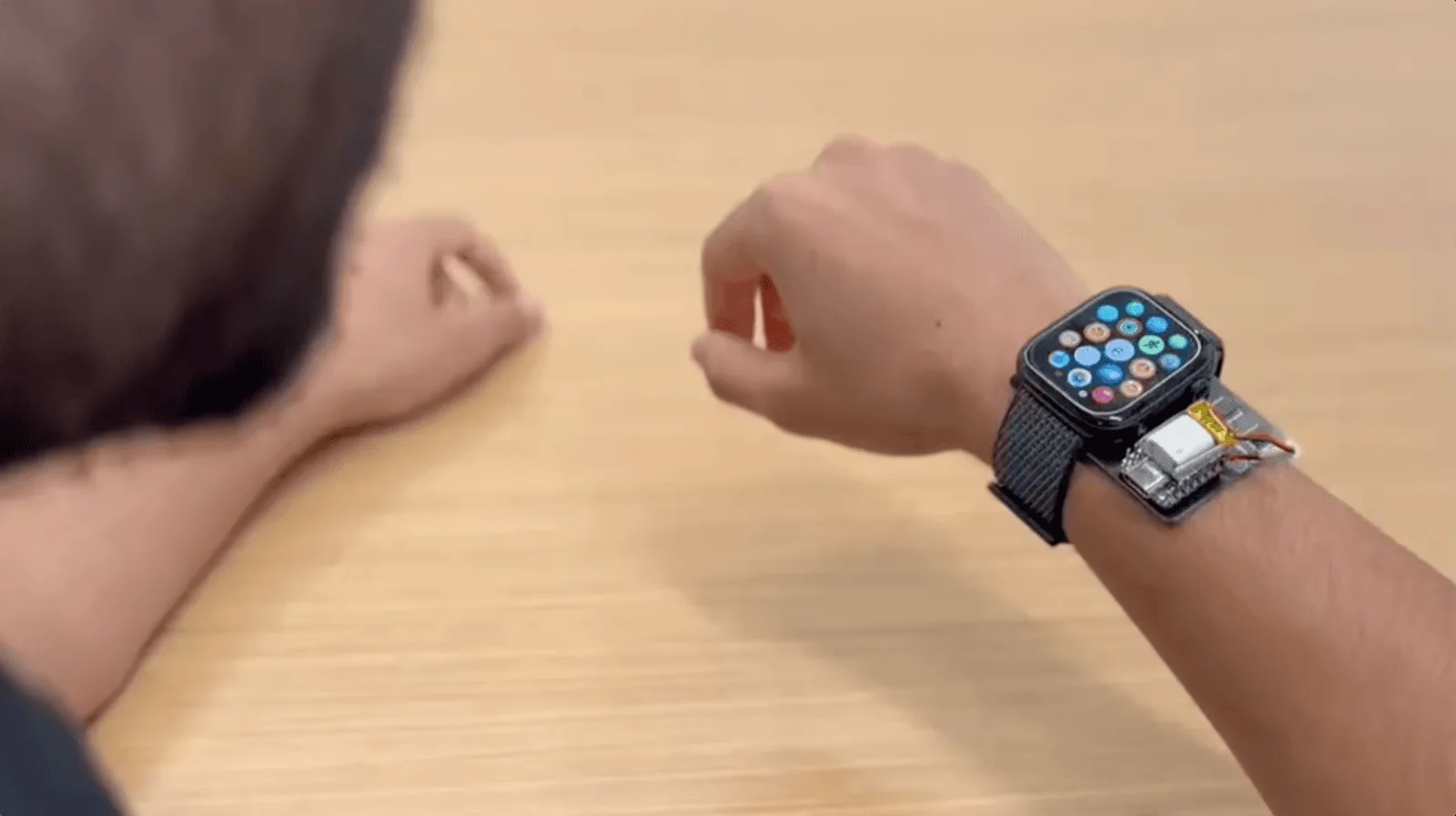
Integrating Wrist EIT Gesture Sensing into Smartwatch Hardware

Xuanyou Liu, Novel Alam, Karan Ahuja

ACM Symposium on User Interface Software and Technology

Wrist electrical impedance tomography offers a camera-free way to sense hand activity on wearables, but fitting this sensing into everyday device form factors remains difficult. We investigate a smartwatch-oriented design that embeds planar electrodes in a conventional watch-back layout and evaluate its ability to support gesture recognition in user studies. The results suggest that integrating EIT into familiar wearable hardware is a practical direction for unobtrusive input.
Wrist EIT sensing study with varied arm postures
IMWUT 2026 Under Review

How Arm Posture Affects Wrist EIT Hand Sensing

Xuanyou Liu, Suril Mehta, Jessie Sheflin, Chenfeng Gao, Karan Ahuja

Proceedings of the ACM on Interactive, Mobile, Wearable and Ubiquitous Technologies

Wrist electrical impedance tomography can enable privacy-preserving hand sensing without cameras, but everyday use depends on how stable that sensing remains as the arm moves. We examine this posture dependence with wearable data collected across different users, hand configurations, and arm positions. The findings show that arm posture can strongly influence sensing quality and that broader posture coverage during training improves generalization to unseen conditions. We also explore learning approaches aimed at improving robustness across users and postures.
MARIO - Multi-sensor inertial odometry with human pose prior for AR tracking
CVPR 2026 Findings To Appear

MARIO: Motion-Augmented Real-Time Multi-Sensor Inertial Odometry

Yiquan Li*, Taeyoung Yeon*, Chenfeng Gao, Vasco Xu, Xuanyou Liu, Karan Ahuja

Findings of the IEEE/CVF Conference on Computer Vision and Pattern Recognition

Inertial odometry using only IMUs offers a lightweight approach to human motion tracking for augmented reality and wearables, but learning-based methods often drift because they lack explicit models of human motion dynamics. We propose MARIO, which grounds inertial odometry in human kinematics through a learned pose prior inferred from IMU data, promoting physically consistent motion during state propagation. We further develop a sensor-fusion framework that incorporates auxiliary signals from lightweight sensors already available on commercial AR glasses, including magnetometers, barometers, and secondary IMUs. Evaluated on a large-scale motion dataset, MARIO substantially reduces positional drift compared with strong IO baselines and improves robustness across diverse motion conditions, pointing toward lightweight, camera-free human tracking that unifies kinematic priors with multimodal sensing.
Seeing with the Hands - Hand-mounted electrotactile display for sensory substitution
CHI 2025

Seeing with the Hands: A Sensory Substitution That Supports Manual Interactions

Shan-Yuan Teng*, Gene Kim*, Xuanyou Liu*, Pedro Lopes

ACM Conference on Human Factors in Computing Systems

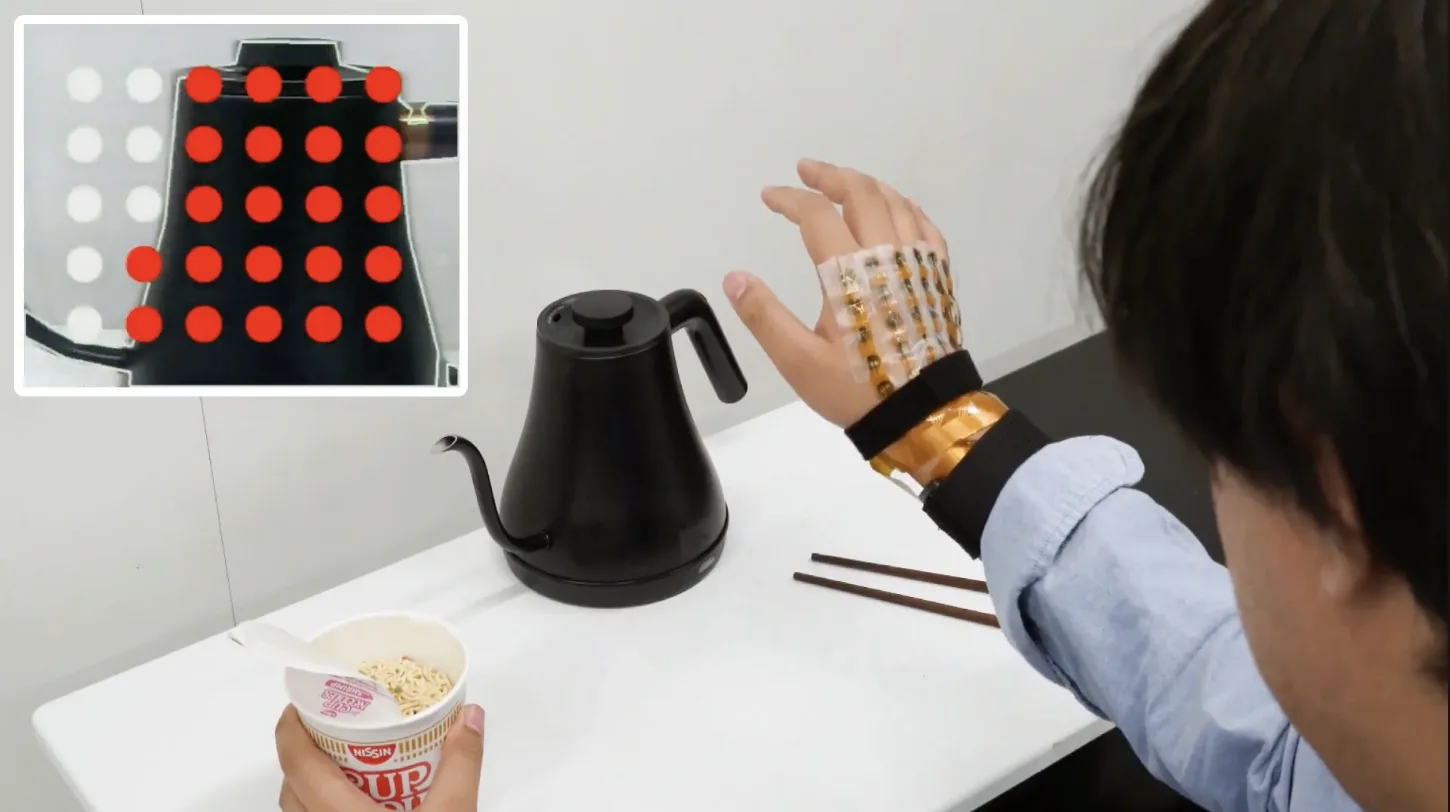
Sensory substitution devices enable users to perceive visual information through other modalities, such as touch. However, most existing devices place the camera at the user's eyes (head-mounted), which limits the ability to coordinate manual interactions. We propose "seeing and feeling" from the hand's perspective to enhance the flexibility and expressivity of sensory substitution. To this end, we engineered a back-of-the-hand electrotactile display that renders tactile images from a wrist-mounted camera, allowing users to feel objects while reaching and hovering. In a user study with sighted and blind or low-vision participants, we compared our hand-centered perspective against traditional head-mounted views in manipulation tasks (e.g., handling bottles, soldering). Results indicate that while both perspectives yield comparable performance, participants preferred the flexibility of the hand's perspective, which supported more ergonomic object manipulation strategies.
TacTex - High-resolution electrotactile textile interface with woven electrode structure
CHI 2024

TacTex: A Textile Interface with Seamlessly-Integrated Electrodes for High-Resolution Electrotactile Stimulation

Hongnan Lin, Xuanyou Liu, Shengsheng Jiang, Qi Wang, Ye Tao, Guanyun Wang, Wei Sun, Teng Han, Feng Tian

ACM Conference on Human Factors in Computing Systems

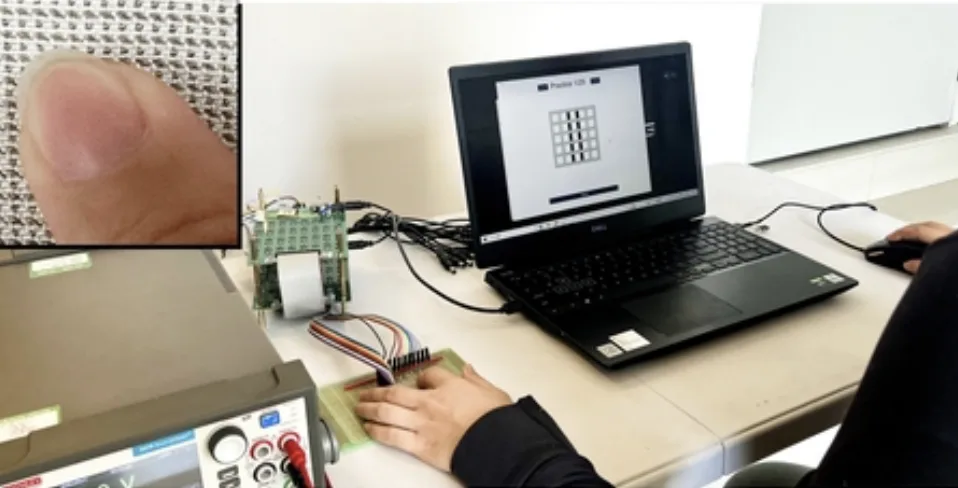
Electrotactile stimulation offers a promising path for high-resolution wearable haptics but has traditionally struggled with integration into soft, everyday textiles. We present TacTex, a textile interface that seamlessly integrates high-density haptic feedback and touch sensing. By employing a novel multi-layer woven structure that separates conductive electrodes with non-conductive yarns, TacTex achieves a sensing and actuation resolution of 512 × 512 with electrode spacing as small as 2mm. The system includes a custom driving board that enables precise spatial and temporal control of electrical stimuli while simultaneously monitoring voltage changes for touch tracking. Our technical evaluation and user studies demonstrate that TacTex can render a wide range of haptic effects, including complex static and dynamic patterns, effectively bringing high-fidelity haptic feedback to everyday clothing.

Contact

Let's Connect

Feel free to reach out if you're interested in human-AI interaction, novel sensing & haptic technologies, or wearable computing. I'm also happy to discuss potential research collaborations or just have a casual chat about the field!