



Xuanyou Liu
Home
CHI 2024 · Full Paper

TacTex

A textile interface with seamlessly-integrated electrodes for high-resolution electrotactile stimulation

Hongnan Lin, Xuanyou Liu, Shengsheng Jiang, Qi Wang, Ye Tao, Guanyun Wang, Wei Sun, Teng Han, Feng Tian

CHI 2024

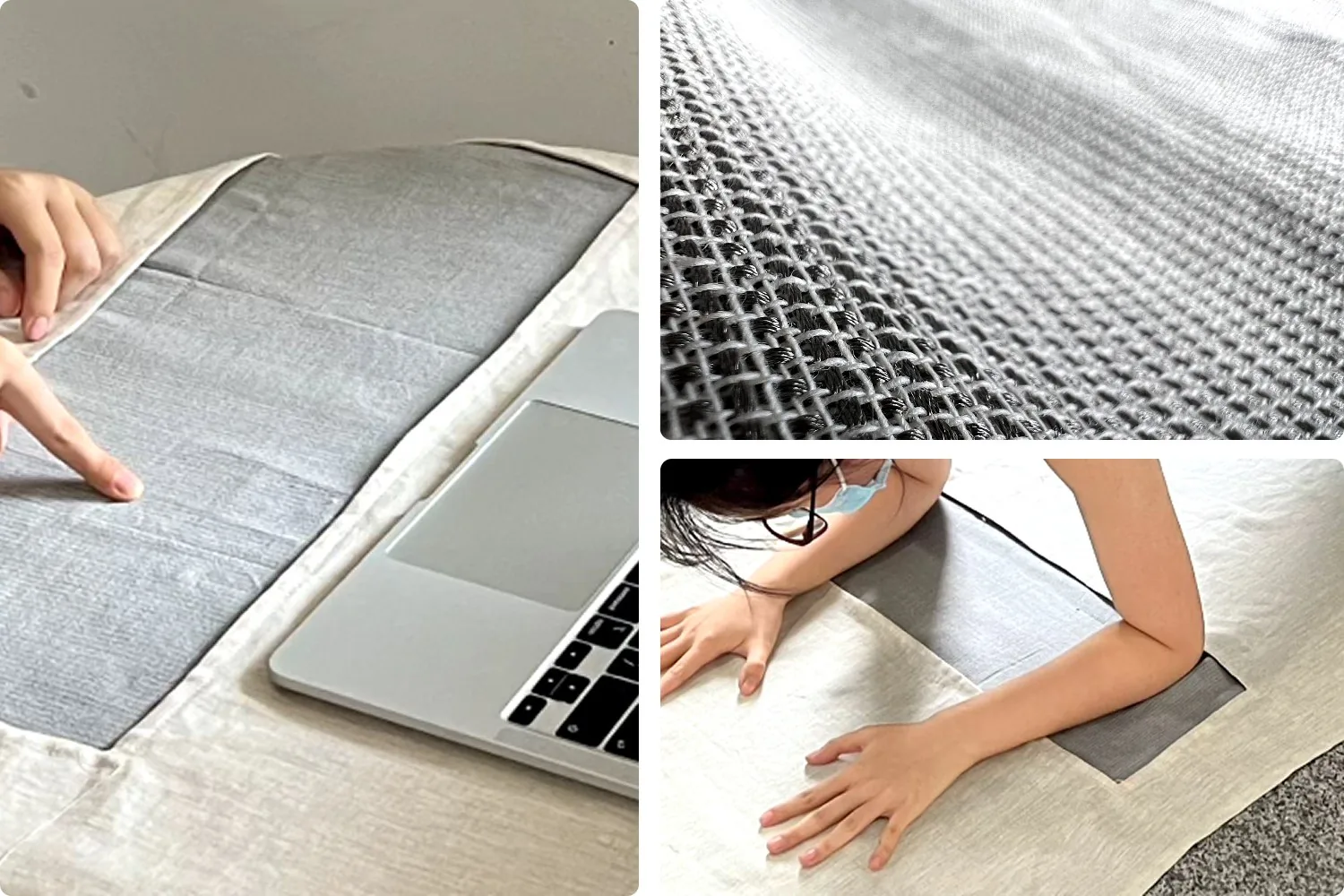
Three photos of the TacTex textile. Left: a person touches a large woven panel lying beside a laptop. Top right: a close-up of the weave with conductive and non-conductive yarns interlaced. Bottom right: a person rests both hands and forearms on a fabric sheet with woven electrode regions.

Abstract

Electrotactile stimulation offers a promising path for high-resolution wearable haptics but has traditionally struggled with integration into soft, everyday textiles. We present TacTex, a textile interface that seamlessly integrates high-density haptic feedback and touch sensing. By employing a novel multi-layer woven structure that separates conductive electrodes with non-conductive yarns, TacTex achieves a sensing and actuation resolution of 512 × 512 with electrode spacing as small as 2 mm. The system includes a custom driving board that enables precise spatial and temporal control of electrical stimuli while simultaneously monitoring voltage changes for touch tracking. Our technical evaluation and user studies demonstrate that TacTex can render a wide range of haptic effects, including complex static and dynamic patterns, effectively bringing high-fidelity haptic feedback to everyday clothing.

Electrotactile stimulation

Electrotactile stimulation injects current through surface electrodes to stimulate afferent nerve endings in the skin, which produces sensations such as touch, vibration, pressure and spatial patterns. TacTex uses linear electrodes, which simplifies the electrodes, the wiring and the driving circuit.
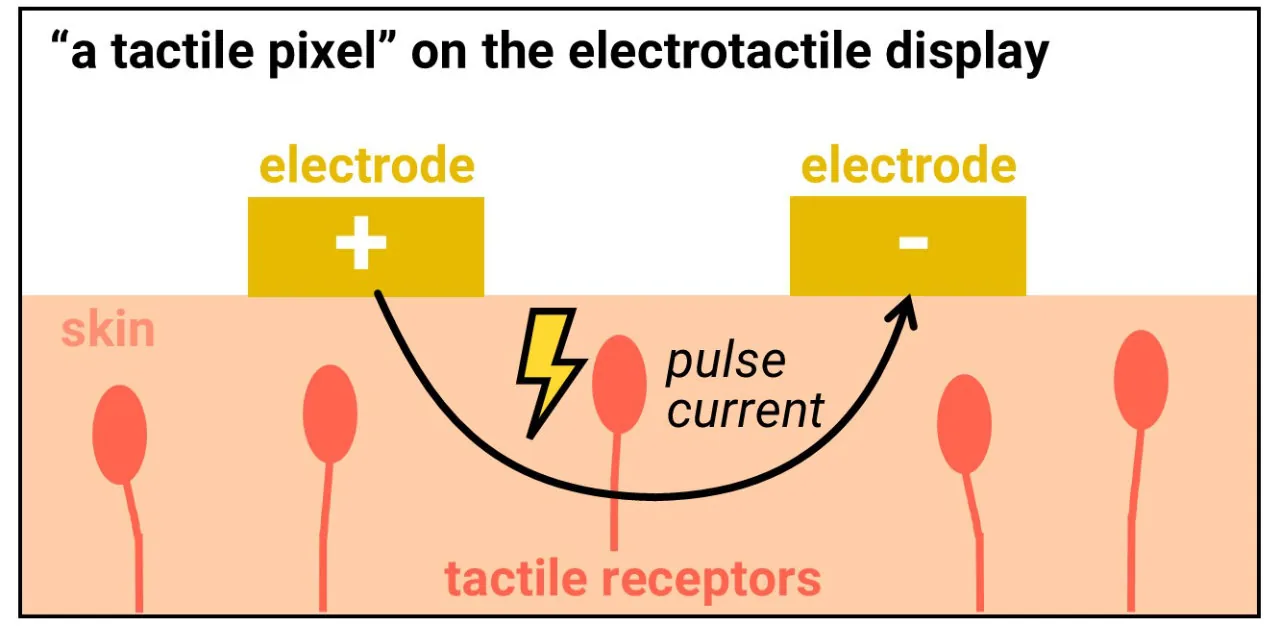
A diagram of a cross section of the skin, titled a tactile pixel on the electrotactile display. Two electrodes are shown labeled with plus and minus correspondingly. An arrow pointing from plus electrode goes to the minus electrode. The arrow is labeled with a lightning icon and the word pulse current. The arrow intersects with a drawing of a tactile receptor, with more receptors drawn nearby.
Each tactile pixel is a pair of parallel electrodes; in TacTex these are two conductive yarns in the weave. Current pulses between the two yarns stimulate afferent nerve endings in the skin and are felt as a localised touch.
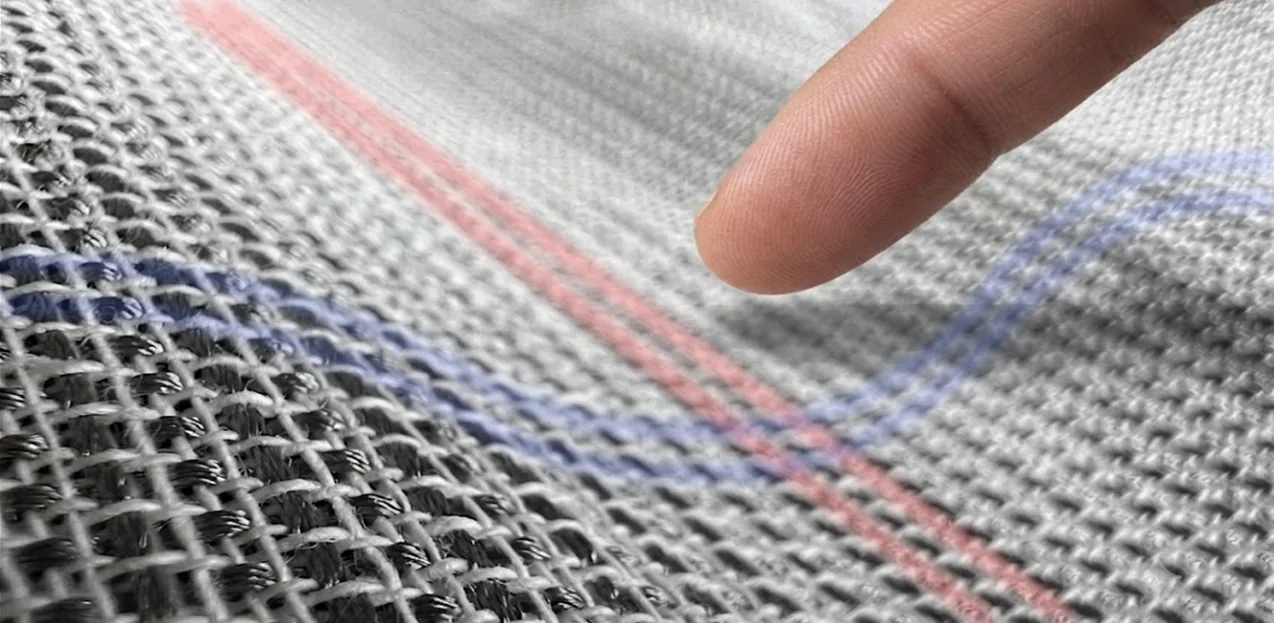
A close-up of the woven textile with a fingertip touching it. Overlaid red and blue lines run through the weave, tracing the conductive yarns that form patterns on the fabric.
Activating several pixels together draws a static pattern, such as a thin vertical line; updating the active pixels over time draws a dynamic pattern, such as a line sweeping across the fabric. The quality of the sensation (pricking, caressing, tapping or pressing) is set by the pixel properties and the burst parameters.

Tactile pixel

Each tactile pixel is a pair of parallel electrodes; in TacTex these are two conductive yarns in the weave. Current pulses between the two yarns stimulate afferent nerve endings in the skin and are felt as a localised touch. Pixels activated within the same burst period are perceived as activated together.

A diagram of a cross section of the skin, titled a tactile pixel on the electrotactile display. Two electrodes are shown labeled with plus and minus correspondingly. An arrow pointing from plus electrode goes to the minus electrode. The arrow is labeled with a lightning icon and the word pulse current. The arrow intersects with a drawing of a tactile receptor, with more receptors drawn nearby.
An electrotactile pixel: current passes between a pair of electrodes through the skin (diagram from the paper).
static patterna thin vertical linedynamic patternthe line sweeps across the fabric
Static and dynamic patterns on the weave.

Patterns and qualities

Activating several pixels together draws a static pattern, such as a thin vertical line; updating the active pixels over time draws a dynamic pattern, such as a line sweeping across the fabric. The quality of the sensation (pricking, caressing, tapping or pressing) is set by the pixel properties and the burst parameters.

A close-up of the woven textile with a fingertip touching it. Overlaid red and blue lines run through the weave, tracing the conductive yarns that form patterns on the fabric.
Lines running through the weave under a fingertip.

Implementation

TacTex consists of a woven electrode array, a driving circuit that stimulates the electrodes and reads touch through the same hardware, and a connection between the two.
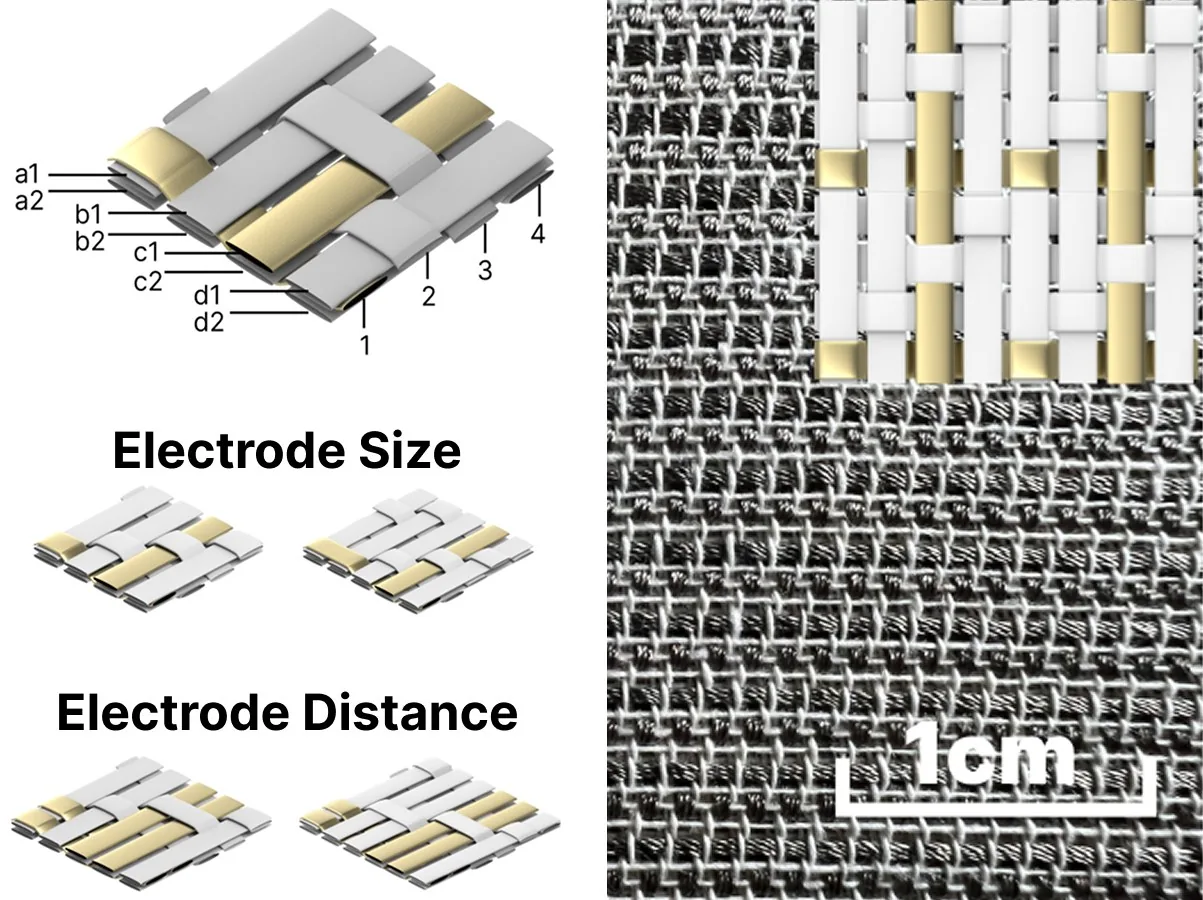
The weave structure. Top left: a 3D diagram of the multi-layer weave unit with labelled warp and weft yarns. Below: variants showing how yarn counts set electrode size and spacing. Right: a photograph of the woven fabric with a 1 cm scale bar and a rendering of the weave overlaid.
Textile design. Conductive and non-conductive yarns are woven in one run, on a rapier loom in our evaluation, into a two-layer structure. Warp electrodes are separated from each other by non-conductive warp yarns and weft electrodes by non-conductive weft yarns, and the two sets are kept apart by non-conductive weft yarns on the bottom layer. Electrode size follows from the number of conductive yarns per electrode and electrode spacing from the number of non-conductive yarns between electrodes, down to 2 mm. Closer spacing raises electrode density but also the risk of short circuits; the paper reports short-circuit rates for several weave variants and mitigates the risk with additional layers. The same electrodes are used for stimulation and for touch tracking.
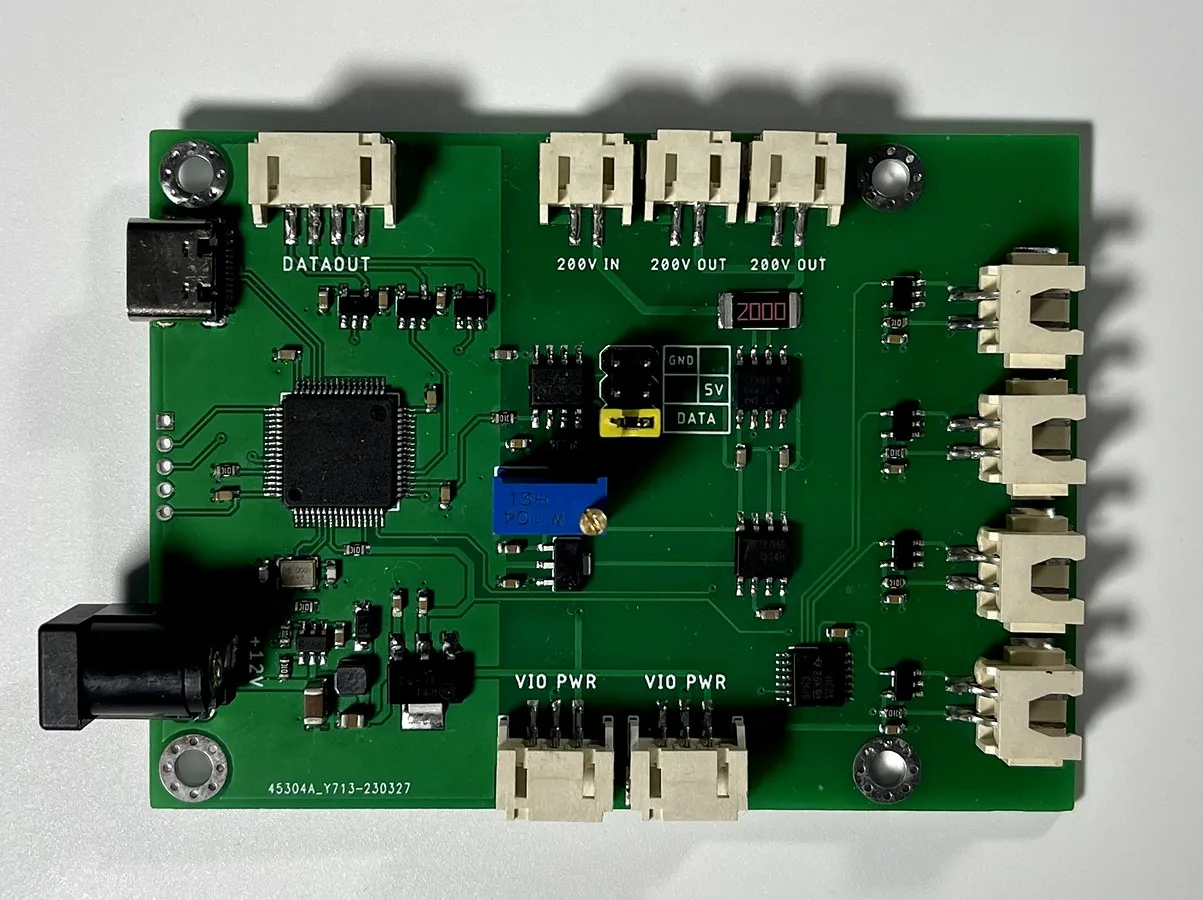
The driving board: a green circuit board with a microcontroller, a 200 volt input and two 200 volt outputs, data and power connectors, and rows of sockets that route stimulation and sensing to the textile's electrodes.
Driving circuit. A custom stack of power, switch and sensing boards selects which electrode pair receives pulses at each moment. Pulses are short, so the pairs can be cycled fast enough that pixels activated within the same burst period feel simultaneous. Between stimulation pulses, the same hardware measures a voltage to detect touch, so stimulation and sensing share one surface.
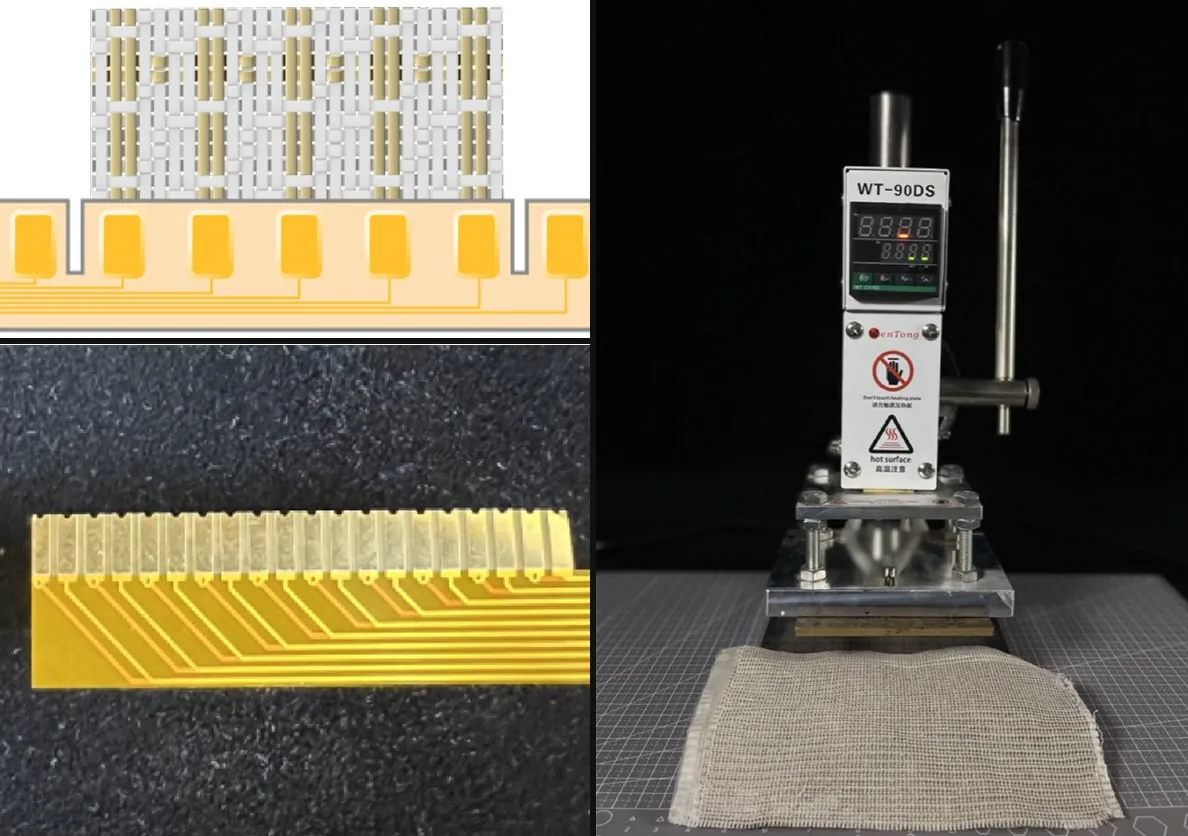
The fabric-to-board connection. Top left: a diagram of edge electrodes bonding to pitch-matched pads. Bottom left: a close-up of the flexible printed connector with fanned-out golden traces. Right: a heat press clamping the connector onto the woven textile.
Connection. The electrodes at the textile edge are joined to contact pads on a custom flexible printed cable (polyimide and copper) whose pad pitch matches the textile, using an anisotropic conductive adhesive (ACA). The adhesive conducts only in the vertical direction between stacked contacts, so each electrode gets its own channel to the driving board without adding rigid or bulky elements. Because the electrodes are continuous lines across the cloth, a 512×512 array needs 512 + 512 connections instead of one per point.

Textile design

Conductive and non-conductive yarns are woven in one run, on a rapier loom in our evaluation, into a two-layer structure. Warp electrodes are separated from each other by non-conductive warp yarns and weft electrodes by non-conductive weft yarns, and the two sets are kept apart by non-conductive weft yarns on the bottom layer. Electrode size follows from the number of conductive yarns per electrode and electrode spacing from the number of non-conductive yarns between electrodes, down to 2 mm. Closer spacing raises electrode density but also the risk of short circuits; the paper reports short-circuit rates for several weave variants and mitigates the risk with additional layers. The same electrodes are used for stimulation and for touch tracking.

The weave structure. Top left: a 3D diagram of the multi-layer weave unit with labelled warp and weft yarns. Below: variants showing how yarn counts set electrode size and spacing. Right: a photograph of the woven fabric with a 1 cm scale bar and a rendering of the weave overlaid.
The weave structure (paper Fig. 3): electrode size and spacing follow from the yarn counts.

Driving circuit

Injectionstimulating pulses pass through the skin and are feltSensinga short pulse, read at the sampling resistortextile electrodesH1L1H2L2H3L3every other electrode stays at high impedancefelt as touchimperceptible to the fingeradjustable high-voltageconstant-current supplysampling resistorswitch Hswitch LskinampAD8479ADCADS7044STM32comparereading = referencenot touchedreading differs from referencetouched
Simplified schematic of the driving circuit, animated.
The driving board: a green circuit board with a microcontroller, a 200 volt input and two 200 volt outputs, data and power connectors, and rows of sockets that route stimulation and sensing to the textile's electrodes.
The driving board, part of a custom stack of power, switch, and sensing boards.

Stimulation and touch tracking use the same hardware: the power supply, the switches and the electrodes, shared in turns by time-division multiplexing. The circuit consists of an adjustable high-voltage constant-current supply, a sensing board, and 16 sets of controllers paired with tri-state switches. Each switch can connect its electrode to a high voltage, to ground, or leave it at high impedance; the schematic shows only the two switches of the active pair.

During stimulation, pulses pass through an activated pair of electrodes and the finger. During sensing, a short pulse passes through a sampling resistor, and the sensing board compares the measured voltage with a reference value. If the two are equal, the pair is not touched; otherwise it is.

Connection to the driving board

The fabric-to-board connection. Top left: a diagram of edge electrodes bonding to pitch-matched pads. Bottom left: a close-up of the flexible printed connector with fanned-out golden traces. Right: a heat press clamping the connector onto the woven textile.
The flexible printed cable and the press used to bond it to the textile edge (paper Fig. 4).

The electrodes at the textile edge are joined to contact pads on a custom flexible printed cable (polyimide and copper) whose pad pitch matches the textile, using an anisotropic conductive adhesive (ACA). The adhesive conducts only in the vertical direction between stacked contacts, so each electrode gets its own channel to the driving board without adding rigid or bulky elements. Because the electrodes are continuous lines across the cloth, a 512×512 array needs 512 + 512 connections instead of one per point.

User study

Experiment 1 measured how accurately participants could identify the four sensation qualities, the ten static patterns and the ten dynamic patterns rendered by TacTex.
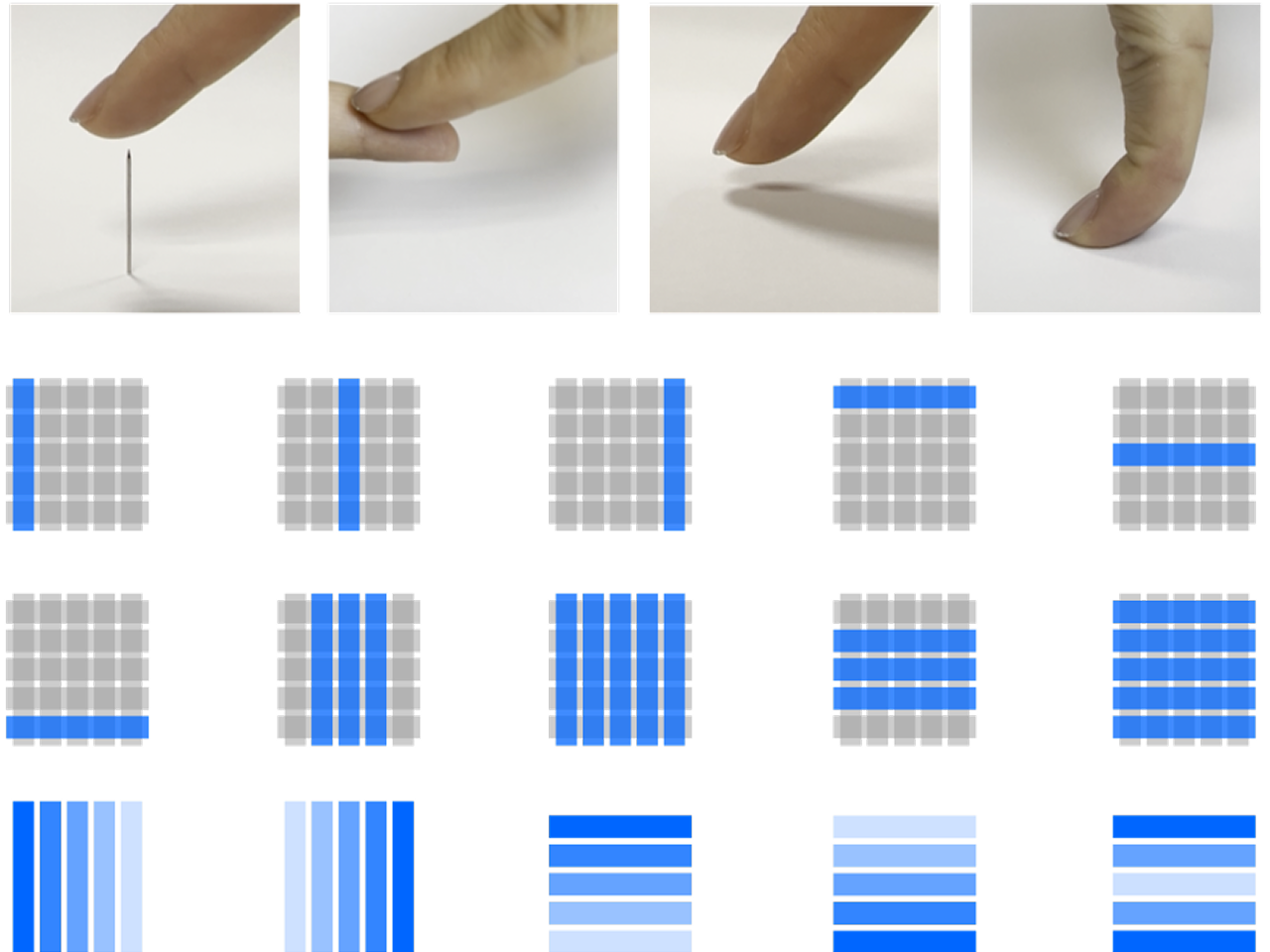
The stimulus set. Top: photographs of four sensation qualities delivered to a fingertip. Below: grids showing static patterns, such as single vertical or horizontal lines, and dynamic patterns rendered as sequences of bars sweeping across the array.
What we render. The display produces four sensation qualities (pricking, caressing, tapping, and pressing) plus ten static patterns, such as a thin vertical line, and ten dynamic patterns, such as a line sweeping across the fabric.
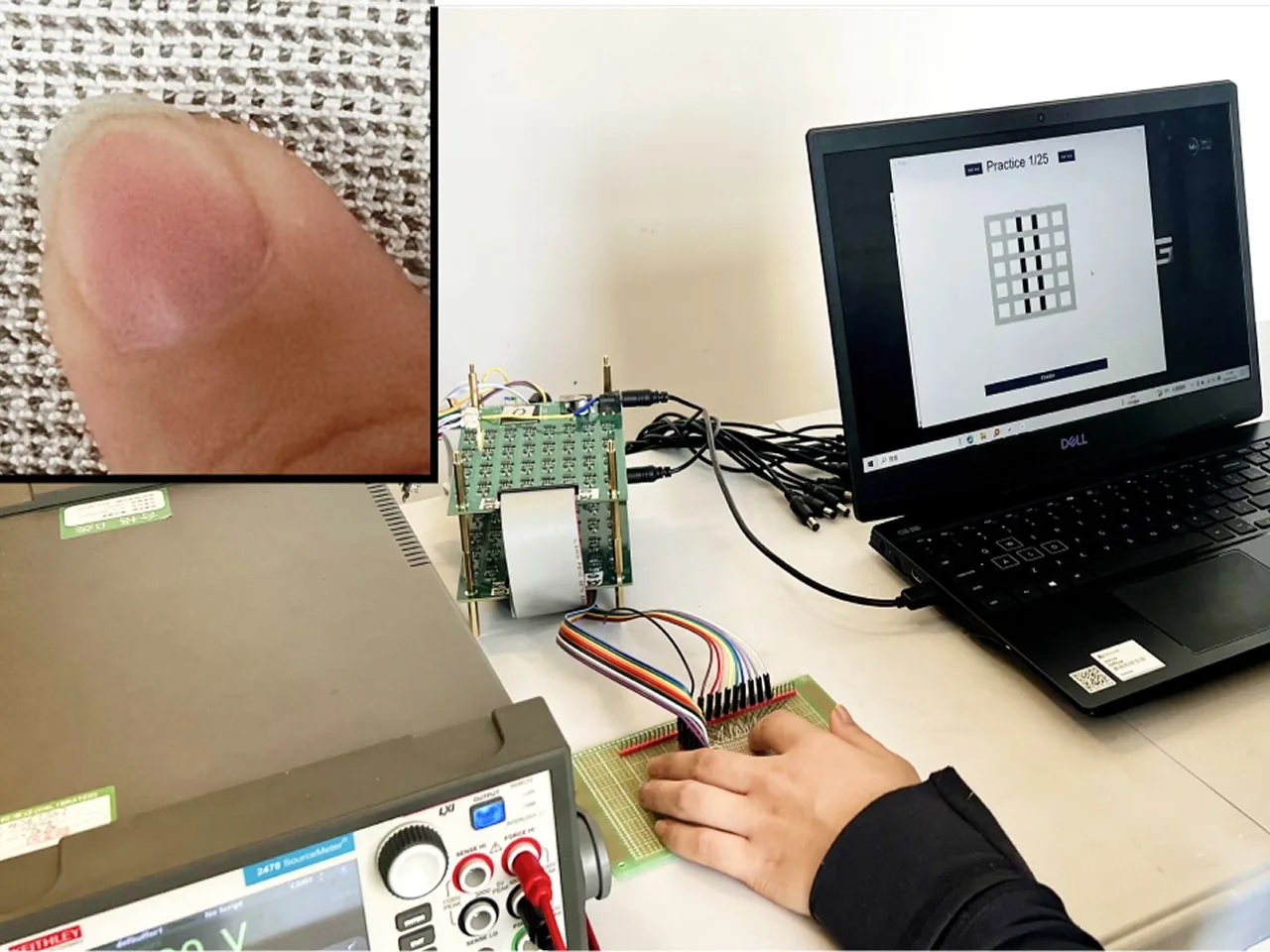
The study setup: a participant rests their hand on the electrode board, connected by a ribbon cable to the drive stack and a laptop showing a practice trial; an inset shows a fingertip touching the woven textile.
Study protocol. Twelve participants identified the sensation quality or pattern of each stimulus, presented six times in random order.
Two stimulus-perception matrices, one for static patterns and one for dynamic patterns. Each is a ten by ten grid where rows are the pattern presented and columns the pattern reported. Bright cells run along the diagonal, showing that the pattern participants reported was usually the one presented.
What we found. Rows are the pattern presented, columns the pattern reported. The bright diagonal means responses mostly landed on the pattern actually rendered; the off-diagonal cells cluster among similar patterns.

Stimuli

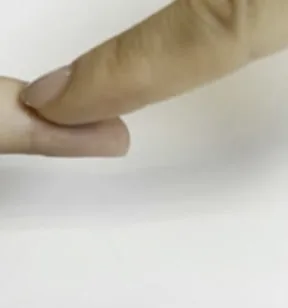
The stimulus set has four sensation qualities, ten static patterns and ten dynamic patterns. Pricking is a discrete, sharp and shallow sensation; caressing is continuous, blurry and shallow; tapping is discrete, blurry and deep; pressing is continuous, blurry and deep. Dynamic patterns update the active pixels frame by frame and repeat every 2 seconds.
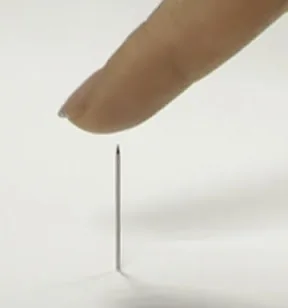
A needle held just above a fingertip, illustrating pricking.
Pricking
Two fingers brushing against each other, illustrating caressing.
Caressing
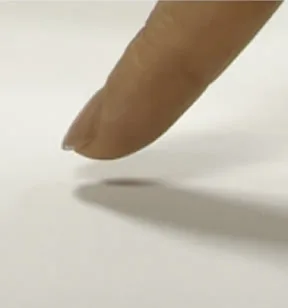
A fingertip hovering just above a surface, illustrating tapping.
Tapping
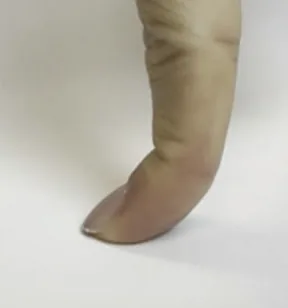
A fingertip pressing down onto a surface, illustrating pressing.
Pressing
The four sensation qualities, illustrated.
The study setup: a participant rests their hand on the electrode board, connected by a ribbon cable to the drive stack and a laptop showing a practice trial; an inset shows a fingertip touching the woven textile.
The study setup, with a close-up of a fingertip on the textile.

Procedure

Twelve healthy adults (6 female, mean age 24.5 years, SD 3.68) took part after giving informed consent; none had prior experience with electrotactile stimulation. Each participant's sensation threshold and maximum comfortable level were calibrated first, and the stimulus current was set to the threshold plus 80% of the range up to the maximum. After practice trials, participants completed three tests: sensation qualities, static patterns and dynamic patterns. Within a test, each item was presented six times in random order, and participants chose the sensation or pattern they perceived from the options shown on a computer, with no time limit. Afterwards they rated electrode-induced pain on a 0 to 10 numeric rating scale (mean 2.75, SD 1.60).

Results

Test Items Accuracy Per-class balanced accuracy
Sensation qualities40.780.77 to 0.89
Static patterns100.880.84 to 0.99
Dynamic patterns100.750.77 to 0.92
Identification accuracy averaged over the 12 participants; every item was presented six times (paper Section 4.2.2).
Sensation qualitiesaccuracy 0.7805tappingtappingprickingprickingpressingpressingcaressingcaressingPresented tapping, reported tapping: 61 of 7261Presented tapping, reported pricking: 6 of 726Presented tapping, reported pressing: 0 of 720Presented tapping, reported caressing: 5 of 725Presented pricking, reported tapping: 10 of 7210Presented pricking, reported pricking: 57 of 7257Presented pricking, reported pressing: 0 of 720Presented pricking, reported caressing: 5 of 725Presented pressing, reported tapping: 1 of 711Presented pressing, reported pricking: 1 of 711Presented pressing, reported pressing: 61 of 7161Presented pressing, reported caressing: 8 of 718Presented caressing, reported tapping: 3 of 723Presented caressing, reported pricking: 9 of 729Presented caressing, reported pressing: 15 of 7215Presented caressing, reported caressing: 45 of 7245rows: presented, columns: reportedreported correctly (deeper = more of that row)reported as another onelargest confusion

Rows give the quality presented and columns the quality reported. The diagonal (purple) holds correct responses and the off-diagonal cells (red) are confusions.

Caressing had the lowest balanced accuracy of the four qualities (0.77): 15 of its 72 presentations were reported as pressing. Pricking and tapping were never reported as pressing. In the interviews, participants described pricking and tapping as discrete sensations and caressing and pressing as continuous.

Static patternsaccuracy 0.8792, numbers as in Figure 6D of the paper556677889910101111121213131414Presented pattern 5, reported pattern 5: 70 of 7270Presented pattern 5, reported pattern 6: 1 of 721Presented pattern 5, reported pattern 7: 0 of 720Presented pattern 5, reported pattern 8: 0 of 720Presented pattern 5, reported pattern 9: 0 of 720Presented pattern 5, reported pattern 10: 0 of 720Presented pattern 5, reported pattern 11: 1 of 721Presented pattern 5, reported pattern 12: 0 of 720Presented pattern 5, reported pattern 13: 0 of 720Presented pattern 5, reported pattern 14: 0 of 720Presented pattern 6, reported pattern 5: 1 of 891Presented pattern 6, reported pattern 6: 83 of 8983Presented pattern 6, reported pattern 7: 0 of 890Presented pattern 6, reported pattern 8: 1 of 891Presented pattern 6, reported pattern 9: 3 of 893Presented pattern 6, reported pattern 10: 0 of 890Presented pattern 6, reported pattern 11: 1 of 891Presented pattern 6, reported pattern 12: 0 of 890Presented pattern 6, reported pattern 13: 0 of 890Presented pattern 6, reported pattern 14: 0 of 890Presented pattern 7, reported pattern 5: 0 of 720Presented pattern 7, reported pattern 6: 1 of 721Presented pattern 7, reported pattern 7: 69 of 7269Presented pattern 7, reported pattern 8: 0 of 720Presented pattern 7, reported pattern 9: 0 of 720Presented pattern 7, reported pattern 10: 0 of 720Presented pattern 7, reported pattern 11: 1 of 721Presented pattern 7, reported pattern 12: 1 of 721Presented pattern 7, reported pattern 13: 0 of 720Presented pattern 7, reported pattern 14: 0 of 720Presented pattern 8, reported pattern 5: 0 of 710Presented pattern 8, reported pattern 6: 0 of 710Presented pattern 8, reported pattern 7: 0 of 710Presented pattern 8, reported pattern 8: 70 of 7170Presented pattern 8, reported pattern 9: 1 of 711Presented pattern 8, reported pattern 10: 0 of 710Presented pattern 8, reported pattern 11: 0 of 710Presented pattern 8, reported pattern 12: 0 of 710Presented pattern 8, reported pattern 13: 0 of 710Presented pattern 8, reported pattern 14: 0 of 710Presented pattern 9, reported pattern 5: 1 of 901Presented pattern 9, reported pattern 6: 1 of 901Presented pattern 9, reported pattern 7: 0 of 900Presented pattern 9, reported pattern 8: 3 of 903Presented pattern 9, reported pattern 9: 84 of 9084Presented pattern 9, reported pattern 10: 1 of 901Presented pattern 9, reported pattern 11: 0 of 900Presented pattern 9, reported pattern 12: 0 of 900Presented pattern 9, reported pattern 13: 0 of 900Presented pattern 9, reported pattern 14: 0 of 900Presented pattern 10, reported pattern 5: 0 of 720Presented pattern 10, reported pattern 6: 0 of 720Presented pattern 10, reported pattern 7: 0 of 720Presented pattern 10, reported pattern 8: 0 of 720Presented pattern 10, reported pattern 9: 1 of 721Presented pattern 10, reported pattern 10: 71 of 7271Presented pattern 10, reported pattern 11: 0 of 720Presented pattern 10, reported pattern 12: 0 of 720Presented pattern 10, reported pattern 13: 0 of 720Presented pattern 10, reported pattern 14: 0 of 720Presented pattern 11, reported pattern 5: 0 of 720Presented pattern 11, reported pattern 6: 3 of 723Presented pattern 11, reported pattern 7: 0 of 720Presented pattern 11, reported pattern 8: 0 of 720Presented pattern 11, reported pattern 9: 1 of 721Presented pattern 11, reported pattern 10: 0 of 720Presented pattern 11, reported pattern 11: 56 of 7256Presented pattern 11, reported pattern 12: 3 of 723Presented pattern 11, reported pattern 13: 7 of 727Presented pattern 11, reported pattern 14: 2 of 722Presented pattern 12, reported pattern 5: 1 of 711Presented pattern 12, reported pattern 6: 0 of 710Presented pattern 12, reported pattern 7: 0 of 710Presented pattern 12, reported pattern 8: 0 of 710Presented pattern 12, reported pattern 9: 0 of 710Presented pattern 12, reported pattern 10: 1 of 711Presented pattern 12, reported pattern 11: 15 of 7115Presented pattern 12, reported pattern 12: 49 of 7149Presented pattern 12, reported pattern 13: 1 of 711Presented pattern 12, reported pattern 14: 4 of 714Presented pattern 13, reported pattern 5: 1 of 721Presented pattern 13, reported pattern 6: 1 of 721Presented pattern 13, reported pattern 7: 1 of 721Presented pattern 13, reported pattern 8: 2 of 722Presented pattern 13, reported pattern 9: 10 of 7210Presented pattern 13, reported pattern 10: 0 of 720Presented pattern 13, reported pattern 11: 2 of 722Presented pattern 13, reported pattern 12: 0 of 720Presented pattern 13, reported pattern 13: 53 of 7253Presented pattern 13, reported pattern 14: 2 of 722Presented pattern 14, reported pattern 5: 0 of 720Presented pattern 14, reported pattern 6: 0 of 720Presented pattern 14, reported pattern 7: 0 of 720Presented pattern 14, reported pattern 8: 0 of 720Presented pattern 14, reported pattern 9: 0 of 720Presented pattern 14, reported pattern 10: 0 of 720Presented pattern 14, reported pattern 11: 0 of 720Presented pattern 14, reported pattern 12: 4 of 724Presented pattern 14, reported pattern 13: 11 of 7211Presented pattern 14, reported pattern 14: 57 of 7257rows: presented, columns: reportedDynamic patternsaccuracy 0.7492, numbers as in Figure 6E of the paper1515161617171818191920202121222223232424Presented pattern 15, reported pattern 15: 60 of 7160Presented pattern 15, reported pattern 16: 2 of 712Presented pattern 15, reported pattern 17: 3 of 713Presented pattern 15, reported pattern 18: 0 of 710Presented pattern 15, reported pattern 19: 1 of 711Presented pattern 15, reported pattern 20: 0 of 710Presented pattern 15, reported pattern 21: 0 of 710Presented pattern 15, reported pattern 22: 0 of 710Presented pattern 15, reported pattern 23: 3 of 713Presented pattern 15, reported pattern 24: 2 of 712Presented pattern 16, reported pattern 15: 0 of 690Presented pattern 16, reported pattern 16: 57 of 6957Presented pattern 16, reported pattern 17: 0 of 690Presented pattern 16, reported pattern 18: 3 of 693Presented pattern 16, reported pattern 19: 2 of 692Presented pattern 16, reported pattern 20: 0 of 690Presented pattern 16, reported pattern 21: 2 of 692Presented pattern 16, reported pattern 22: 1 of 691Presented pattern 16, reported pattern 23: 0 of 690Presented pattern 16, reported pattern 24: 4 of 694Presented pattern 17, reported pattern 15: 0 of 690Presented pattern 17, reported pattern 16: 5 of 695Presented pattern 17, reported pattern 17: 52 of 6952Presented pattern 17, reported pattern 18: 2 of 692Presented pattern 17, reported pattern 19: 0 of 690Presented pattern 17, reported pattern 20: 6 of 696Presented pattern 17, reported pattern 21: 0 of 690Presented pattern 17, reported pattern 22: 0 of 690Presented pattern 17, reported pattern 23: 3 of 693Presented pattern 17, reported pattern 24: 1 of 691Presented pattern 18, reported pattern 15: 0 of 670Presented pattern 18, reported pattern 16: 0 of 670Presented pattern 18, reported pattern 17: 2 of 672Presented pattern 18, reported pattern 18: 55 of 6755Presented pattern 18, reported pattern 19: 0 of 670Presented pattern 18, reported pattern 20: 0 of 670Presented pattern 18, reported pattern 21: 0 of 670Presented pattern 18, reported pattern 22: 1 of 671Presented pattern 18, reported pattern 23: 3 of 673Presented pattern 18, reported pattern 24: 6 of 676Presented pattern 19, reported pattern 15: 1 of 691Presented pattern 19, reported pattern 16: 1 of 691Presented pattern 19, reported pattern 17: 0 of 690Presented pattern 19, reported pattern 18: 1 of 691Presented pattern 19, reported pattern 19: 58 of 6958Presented pattern 19, reported pattern 20: 2 of 692Presented pattern 19, reported pattern 21: 2 of 692Presented pattern 19, reported pattern 22: 1 of 691Presented pattern 19, reported pattern 23: 3 of 693Presented pattern 19, reported pattern 24: 0 of 690Presented pattern 20, reported pattern 15: 2 of 692Presented pattern 20, reported pattern 16: 0 of 690Presented pattern 20, reported pattern 17: 1 of 691Presented pattern 20, reported pattern 18: 4 of 694Presented pattern 20, reported pattern 19: 2 of 692Presented pattern 20, reported pattern 20: 56 of 6956Presented pattern 20, reported pattern 21: 0 of 690Presented pattern 20, reported pattern 22: 3 of 693Presented pattern 20, reported pattern 23: 1 of 691Presented pattern 20, reported pattern 24: 0 of 690Presented pattern 21, reported pattern 15: 0 of 690Presented pattern 21, reported pattern 16: 3 of 693Presented pattern 21, reported pattern 17: 0 of 690Presented pattern 21, reported pattern 18: 0 of 690Presented pattern 21, reported pattern 19: 4 of 694Presented pattern 21, reported pattern 20: 1 of 691Presented pattern 21, reported pattern 21: 53 of 6953Presented pattern 21, reported pattern 22: 4 of 694Presented pattern 21, reported pattern 23: 0 of 690Presented pattern 21, reported pattern 24: 4 of 694Presented pattern 22, reported pattern 15: 1 of 681Presented pattern 22, reported pattern 16: 0 of 680Presented pattern 22, reported pattern 17: 4 of 684Presented pattern 22, reported pattern 18: 1 of 681Presented pattern 22, reported pattern 19: 3 of 683Presented pattern 22, reported pattern 20: 1 of 681Presented pattern 22, reported pattern 21: 1 of 681Presented pattern 22, reported pattern 22: 54 of 6854Presented pattern 22, reported pattern 23: 3 of 683Presented pattern 22, reported pattern 24: 0 of 680Presented pattern 23, reported pattern 15: 4 of 654Presented pattern 23, reported pattern 16: 0 of 650Presented pattern 23, reported pattern 17: 0 of 650Presented pattern 23, reported pattern 18: 8 of 658Presented pattern 23, reported pattern 19: 0 of 650Presented pattern 23, reported pattern 20: 1 of 651Presented pattern 23, reported pattern 21: 4 of 654Presented pattern 23, reported pattern 22: 3 of 653Presented pattern 23, reported pattern 23: 38 of 6538Presented pattern 23, reported pattern 24: 7 of 657Presented pattern 24, reported pattern 15: 0 of 710Presented pattern 24, reported pattern 16: 2 of 712Presented pattern 24, reported pattern 17: 6 of 716Presented pattern 24, reported pattern 18: 1 of 711Presented pattern 24, reported pattern 19: 1 of 711Presented pattern 24, reported pattern 20: 3 of 713Presented pattern 24, reported pattern 21: 0 of 710Presented pattern 24, reported pattern 22: 1 of 711Presented pattern 24, reported pattern 23: 13 of 7113Presented pattern 24, reported pattern 24: 44 of 7144rows: presented, columns: reportedreported correctly (deeper = more of that row)reported as another onelargest confusion
Stimulus-perception matrices for the static and dynamic patterns. Confusions occur mostly between similar patterns: five vertical lines (pattern 12) were reported as three vertical lines (pattern 11) in 15 of 71 presentations. Among the dynamic patterns, the two grid animations (23 and 24) had the lowest balanced accuracies (0.7690 and 0.7903), and pattern 24 was reported as 23 in 13 of 71. Hover a cell for its count.

Team

This is a collaboration between the Institute of Software (Chinese Academy of Sciences), Zhejiang University, and Hangzhou City University by:

Together with Shengsheng Jiang, Qi Wang, Wei Sun, and Feng Tian.

Publication

This work is published at ACM CHI 2024 (see paper via DOI). Authors’ print is available here (PDF).

Lin, H., Liu, X., Jiang, S., Wang, Q., Tao, Y., Wang, G., Sun, W., Han, T., & Tian, F. (2024). TacTex: A Textile Interface with Seamlessly-Integrated Electrodes for High-Resolution Electrotactile Stimulation. In Proceedings of the CHI Conference on Human Factors in Computing Systems (CHI ’24). https://doi.org/10.1145/3613904.3642873
@inproceedings{lin2024tactex,
  title={TacTex: A Textile Interface with Seamlessly-Integrated Electrodes for High-Resolution Electrotactile Stimulation},
  author={Lin, Hongnan and Liu, Xuanyou and Jiang, Shengsheng and Wang, Qi and Tao, Ye and Wang, Guanyun and Sun, Wei and Han, Teng and Tian, Feng},
  booktitle={Proceedings of the 2024 CHI Conference on Human Factors in Computing Systems},
  year={2024},
  doi={10.1145/3613904.3642873}
}